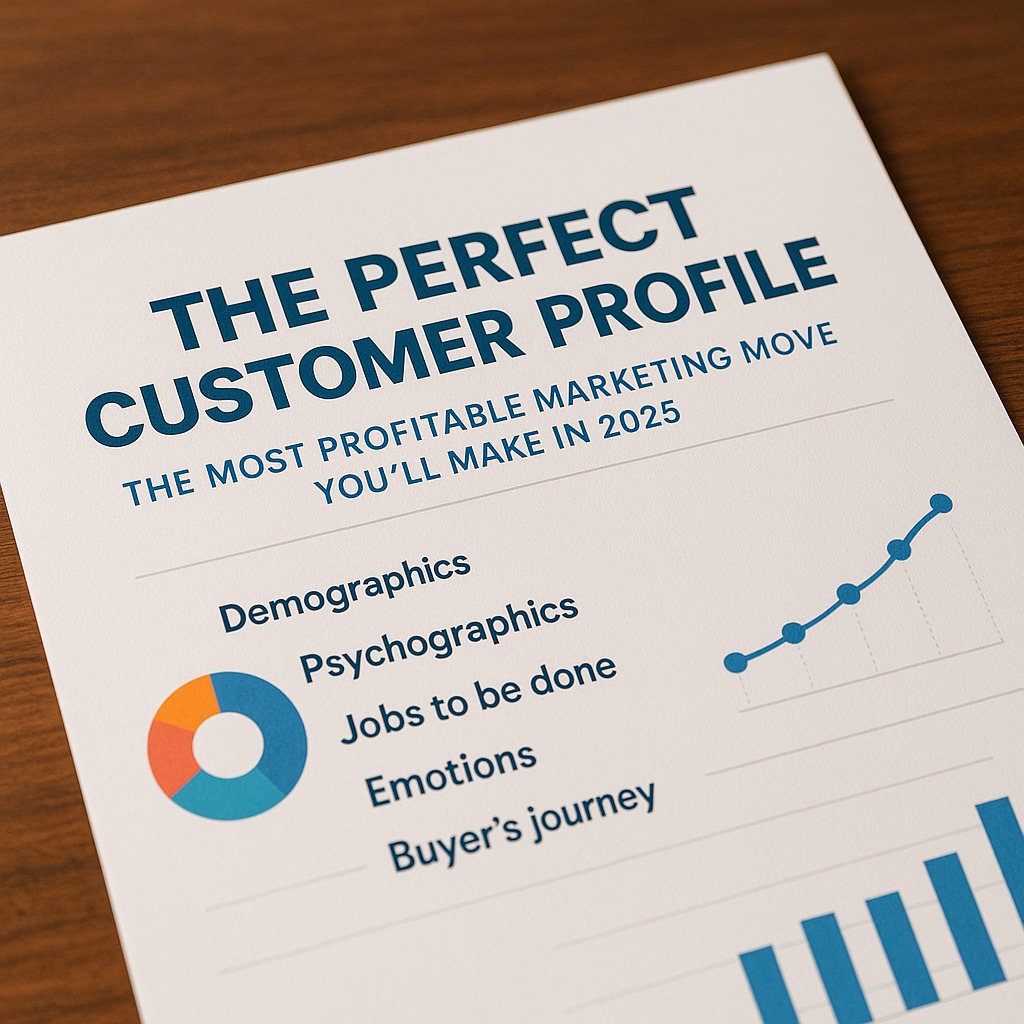
A customer profile is a working description of the people or organizations you are equipped to serve. It should help you ask better questions about needs, buying decisions and delivery fit—not pretend to reveal what every buyer thinks.
The aim is a useful profile, not a “perfect” one. Poor marketing results can have many causes, and research does not guarantee lower costs or more sales.

Start with the situation you can serve
Describe the relevant business need, type of work, geography where it matters and conditions required for successful delivery. Separate commercial fit from permission to contact someone.
A title, company size or software choice does not prove budget, authority or interest. Avoid unrelated personal characteristics and simplistic labels such as “price shopper.” A buyer may have legitimate constraints or a purchasing process you do not yet understand.
Gather evidence without overreaching
Invite customers to discuss an actual buying experience: what prompted the search, which alternatives they considered, what information mattered and what happened after purchase. Explain the purpose and respect their choice not to participate.
Review your own enquiry and sales records alongside those conversations. Check dates and definitions, restrict access to personal information and record uncertainty. A handful of interviews can generate useful questions, but does not represent an entire market.

Distinguish facts from interpretations
Keep three columns in your notes: what the customer actually said or did, your interpretation and the question to verify next. Do not turn an interview comment into a fixed personality label or use private concerns as emotional pressure in sales copy.
For example, “We need approval from finance” is evidence about a process. It does not establish that the buyer is fearful, resistant or unwilling to invest. Ask what information the approval requires.
Describe the progress the customer wants
Write a plain-language statement of the task or change the customer is trying to accomplish. Include the constraints they identify. This can be more useful than a fictional biography with invented age, income or personality details.
A hypothetical statement might be: “When incoming requests are difficult to assign, we want a clearer handoff so customers know who is responding.” It is an example to test, not evidence that a particular market has this need.

Map questions across the buying process
People do not necessarily move through a fixed sequence. Different participants may join at different points. Identify information that could help them make an informed decision:
- Understanding the problem: a clear explanation and relevant questions.
- Comparing approaches: honest differences, limitations and alternatives.
- Evaluating fit: scope, responsibilities, genuine examples and appropriate references.
- Deciding: clear terms, costs, requirements and next steps.
- Starting work: agreed contacts, access, expectations and review arrangements.
Use testimonials, customer clips and logos only with appropriate permission. Do not imply a guaranteed return or create urgency that is not real.

Create a one-page working profile
- The situation and need your offer addresses.
- Relevant fit criteria and important exclusions.
- Evidence, sources, dates and open questions.
- People involved in the decision and what they need to know.
- Delivery expectations and dependencies.
- Relevant ways buyers seek information.
- A review date and one assumption to test next.
Choose channels from evidence about the audience, not a universal B2B or B2C formula. Before outreach, check permissions and applicable requirements; the CRTC’s CASL guidance is a starting point for Canadian electronic marketing.
Review whether the profile helps
Try one manageable change, such as clarifying the information on a service page. Review the relevance of enquiries, customer questions, delivery fit and costs. Record sample size and other changes that may affect results.
More clicks or a higher response rate do not automatically mean more suitable customers. Update the profile when evidence changes, and do not assume that two weeks of research will pay for itself.

Discuss your business priorities
Coaching can help you clarify priorities and review assumptions; this article does not offer a done-for-you research or marketing implementation package. Book a free 15-minute fit call, or apply for two weeks of free coaching. Applications are reviewed personally and acceptance is not guaranteed.