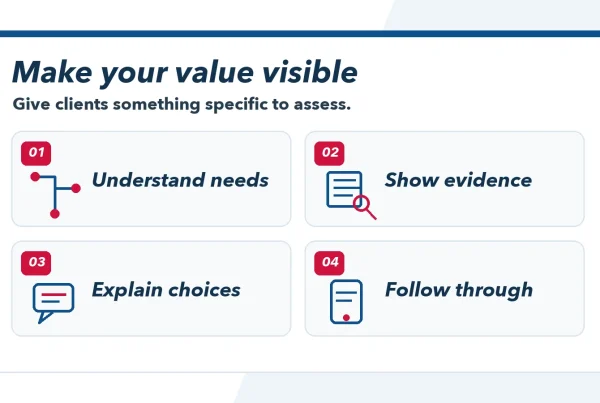

If most sales conversations end with a mismatch over scope, expectations or timing, more enquiries may not solve the problem. It may be time to examine how you describe your service, who it fits and what happens between first interest and an informed decision.
Attracting suitable customers is not effortless or automatic. Content, referrals and respectful outreach can all play a role. Business coaching may help you examine priorities and follow-through, but it does not create demand or deliver a marketing system on your behalf.
Define fit in terms of the work
A useful customer description starts with a problem you are equipped to address. Consider the service required, decision process, delivery conditions and expectations—not a fantasy of a “perfect client” who never asks difficult questions.
- What problem does your service address, and what falls outside its scope?
- What does a customer need to contribute for the work to proceed?
- Which expectations can you meet, and which would be misleading to promise?
- What information helps both sides decide whether to proceed?
Fit is mutual. A prospect may reasonably choose another provider, delay the work or decide not to buy. That does not make them a poor-quality person or prove your offer is wrong.
Make the offer easier to understand
Explain who the service is for, what is included, what is excluded and how someone takes the next step. Distinguish an introductory call from an assessment, a booked appointment from an application, and a possible benefit from a guaranteed result.
Do not add bundles merely to make an offer seem larger. Each component should have a clear purpose and an honest delivery commitment. State relevant conditions, availability and costs before someone commits.
A clear boundary may reduce unsuitable enquiries. That can be useful even when the total enquiry count falls.
Use evidence rather than a “magnetic brand” promise
Consistent presentation helps people recognize what you offer, but branding alone does not prove demand or competence. Show relevant experience accurately and provide useful explanations of how the service works.
Use genuine testimonials only with appropriate permission and context. Label hypothetical examples clearly. Do not present another business’s growth story as evidence that your service will produce the same outcome.
For a deeper look at gathering customer evidence, see the customer-profile guide.
Answer questions people need to resolve
Useful content can address questions such as: What happens first? What preparation is needed? Who is this unsuitable for? How is the work reviewed? What alternatives should a buyer consider?
Choose a manageable publishing and distribution approach. Being present on every channel is not automatically useful, especially if it leaves too little time for delivery or follow-up. Review whether the content is reaching relevant people and answering real questions.
Helpful information does not create an obligation to buy. Avoid treating a download, event conversation or social interaction as unlimited permission to send sales messages.
A hypothetical service-page improvement
Imagine a consultant receiving repeated enquiries for implementation work they do not provide. They revise the service page to explain the advisory scope, the customer’s responsibilities and when a technical provider is needed.
At the review, they examine whether prospective customers understand the boundary earlier and whether conversations are more relevant. The example illustrates a communication change, not a client result or a promise of more sales.
Review the path from interest to delivery
Separate visits, enquiries, qualified conversations, proposals, customers and completed work. Define what each stage means before comparing numbers. Include the time and cost of acquisition and the quality of the resulting work, not just engagement counts.
Ask where people become uncertain or discover a mismatch. Use actual questions and appropriately collected feedback to improve the explanation. Avoid assuming every lost sale reflects weak confidence or a poor mindset.
Where coaching fits
Coaching can help you examine the choices you control: focus, service boundaries, difficult conversations and consistent follow-through. Marketing production, campaign management and specialist advice require their own agreed scope.
Book a free 15-minute fit call to discuss whether coaching is appropriate. You can also apply for two weeks of free coaching. Joel personally reviews applications; acceptance is not guaranteed.