


A disruption rarely arrives when the owner has time to think through every consequence. The internet stops working during a customer deadline. A supplier cannot deliver. A key manager is unavailable. A power failure closes the premises. A useful Vancouver business continuity plan gives the team a small set of decisions they can act on without waiting for perfect information.
This is not about predicting a particular winter emergency. It is about deciding, before normal operations are interrupted, what must continue, who can act, how people will hear from you and when the contingency plan should begin.
The City of Vancouver’s business continuity guidance recommends prioritizing critical functions, identifying the people and resources they require, planning stakeholder communications, naming activation authority and testing the plan. The Province of B.C.’s Economic Preparedness Guide for Businesses reinforces the need for backups, current contacts, secure records, activation triggers and practice.
Those are sound principles. The challenge for an owner-led business is turning them into decisions that fit on one page and can survive a difficult day.
What a Vancouver business continuity plan needs to decide
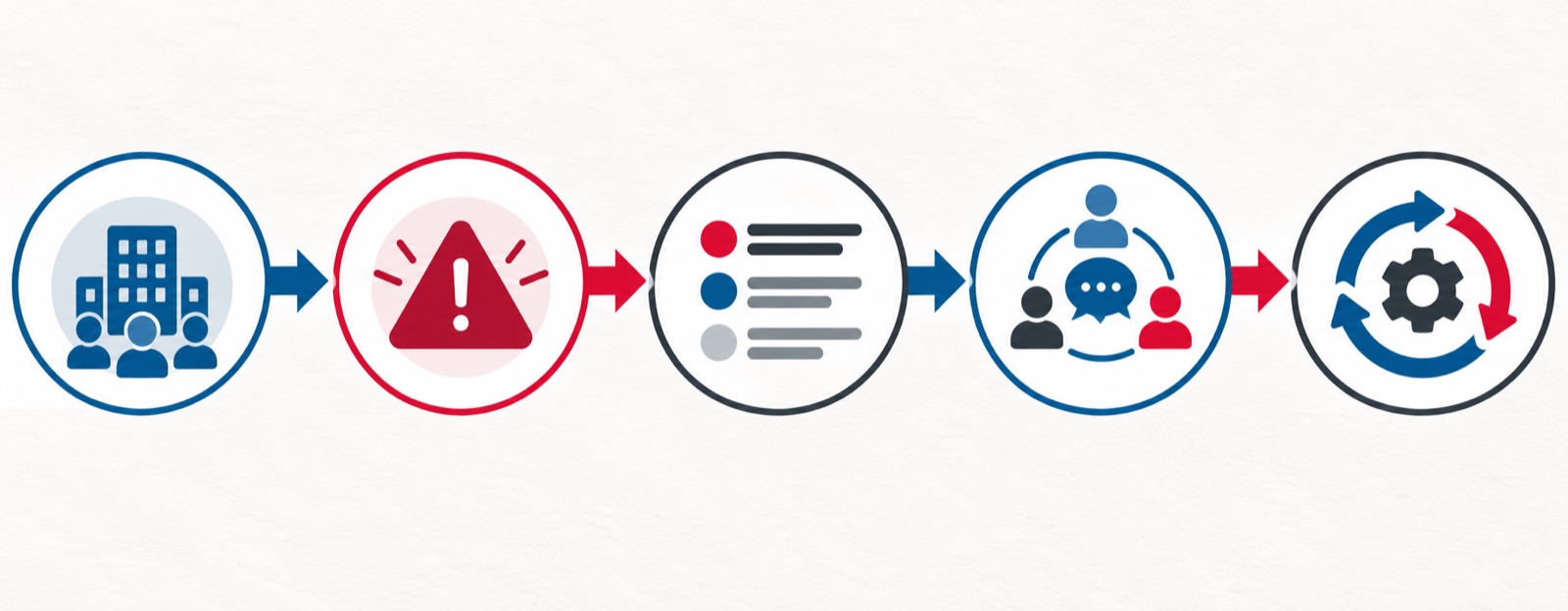
A long document can still fail if the team does not know when to use it or lacks the authority and information to act. Start with five practical decisions.
1. Decide which work must continue first
“Keep the business running” is too broad to guide a pressured team. Name the small number of activities that protect people, customers and cash in the first hours or days.
For one company, that may be payroll, customer support and access to a scheduling system. For another, it may be safe shutdown, a regulated reporting obligation and communication with a critical supplier. Separate work that must continue from work that can pause without creating unacceptable harm.
For each critical activity, ask:
- What outcome must still be produced?
- How long can the activity be interrupted before the impact becomes serious?
- Which people, systems, records, equipment and suppliers does it depend on?
- What is the simplest acceptable temporary process?
This is similar to capacity planning, but the pressure is different. The question is not whether the business can accept more work. It is which promises must be protected when normal capacity is reduced. Joel’s guide to business capacity planning can help you examine the supplier, people and cash dependencies behind those promises.
2. Decide who can act—and who backs them up
A contact list is not the same as decision authority. During a disruption, delays often appear because people know what is happening but do not know what they are permitted to change.
Name one decision owner and one backup for each critical activity. Then make the boundaries explicit. Can they pause a service? Approve temporary spending? Move work to another supplier? Change a customer commitment? Contact the insurer or technical provider?
The backup needs more than a name beside a task. They need access to the information, credentials and relationships required to carry it. Test whether they can actually perform the role without asking the usual owner for a missing password, phone number or approval.
This article is not a succession plan. The time horizon is immediate continuity during an interruption, not the long-term transfer of ownership or leadership. If your test reveals that every important decision still returns to one person, that is a separate operating issue worth examining after the continuity gap is stabilized.
3. Use your Vancouver business continuity plan to guide communication
Silence creates uncertainty. It can also lead several well-intentioned people to send conflicting messages.
Decide in advance who communicates with employees, customers and critical suppliers. Draft the structure of the message rather than predicting the exact event:
- What has changed?
- What is still operating?
- What should the recipient do now?
- When will the next update arrive?
- Where should urgent questions go?
Then choose a fallback channel. If the customer platform or company email is unavailable, will the team use a current phone list, a separate status page or another approved method? Keep privacy and security in view; a convenient workaround should not expose confidential information.
Suppliers deserve the same clarity. Identify which partners affect your most critical work, how to reach an alternate contact and what substitute arrangements are realistic. An untested supplier name on a spreadsheet is not yet a backup.
4. Decide what must remain accessible
A Vancouver business continuity plan depends on information as much as people. PreparedBC’s small-business guidance recommends regular data backups, off-site or cloud-based copies of critical information and staff involvement in the plan.
Create a short continuity set containing only what the response team genuinely needs:
- current employee, customer, supplier and specialist contacts;
- the critical-activity list and named decision owners;
- access instructions stored through an appropriate secure method;
- insurance policy and broker information;
- payroll, banking and accounting contacts and recovery procedures;
- essential contracts, facility information and equipment details; and
- the latest tested data-recovery instructions.
Do not place every password or sensitive record in an unsecured shared document. Ask your IT, cybersecurity, privacy, legal, insurance and financial advisers how the relevant information should be protected and recovered. A business coach can help organize the management decisions; those specialists must address the technical and professional requirements.
If electricity reliability or winter operating costs are part of the risk review, use the separate BC Hydro business incentives and winter checklist to assess energy projects and flexibility. Continuity planning should not turn a technical or capital decision into a rushed purchase.
5. Decide what activates the plan
A plan that begins “in an emergency” leaves the hardest question unanswered: who decides that normal operations are no longer adequate?
Use observable triggers. Examples might include:
- the primary premises are inaccessible for more than a defined period;
- a critical system has no reliable restoration time;
- a staffing shortage leaves a safety or service threshold uncovered;
- a key supplier confirms that a committed delivery cannot be met; or
- an authorized public-safety direction affects the operation.
For each trigger, state who can activate the plan, which activities move first and when the team reassesses. Include the immediate questions that require qualified advice: what does the insurance policy require, what cash obligations are due, which contractual commitments are affected, and which safety, employment, privacy or regulatory duties apply?
A trigger is not a prediction. It is an agreement that prevents the team from losing time debating whether the problem is “serious enough” while the impact grows.
Run a 60-minute continuity meeting
You do not need to finish a comprehensive continuity programme in one meeting. The purpose of the first hour is to expose the most expensive ambiguity and assign the next work.
- Minutes 0–10: Choose one realistic interruption, such as loss of internet, premises or a critical supplier.
- Minutes 10–25: Name the three to five activities that must continue first and the acceptable interruption for each.
- Minutes 25–40: Assign the decision owner and backup, then list the information and authority they require.
- Minutes 40–50: Set one activation trigger and the first employee, customer and supplier messages.
- Minutes 50–60: Choose a test date and assign the specialist questions that need proper advice.
If you want a confidential outside perspective on the operating decisions your continuity meeting exposes, book a free 15-minute fit call with me. We can identify the first management gap to address and whether business coaching for an owner-led company is an appropriate form of support.
Put your Vancouver business continuity plan on one page
Use one row for each critical activity. Keep the first version simple enough that the people named in it will actually review and test it.
| Critical activity | Acceptable interruption | Owner and backup | Required access | Activation trigger | First communication | Test date |
|---|---|---|---|---|---|---|
| Example: customer scheduling | Two hours | Operations lead / service manager | Current schedule, contact list, approved fallback process | Primary platform unavailable for 30 minutes with no confirmed recovery time | Notify affected staff; contact time-sensitive customers | Insert date |
This example is illustrative, not a universal service or recovery standard. Choose thresholds that reflect your operation and professional obligations.

Test the plan before you need it
Choose one scenario and ask the named people to work through the first hour. Do not rescue the exercise by answering every question for them. Watch where the response stalls.
Can the backup find the current information? Can they reach the critical contact? Do they understand the limits of their authority? Can the team explain what customers need to know? Does the temporary process protect safety, privacy, quality and cash?
Record the gaps and correct the most consequential one first. Then set a review date. Update the page when people, systems, suppliers, locations or contractual obligations change. A concise plan that is understood and tested is more useful than a comprehensive document that nobody can activate.
Continuity is a leadership habit
The real value of continuity planning is not the binder. It is the conversation that makes priorities, authority and assumptions visible.
For a Vancouver owner-led business, five clear decisions can create a practical starting point: what must continue, who can act, how messages will move, what must remain accessible and when the plan begins. The exercise will not remove every risk. It can make the first response more deliberate and show where specialist work is still needed.
Book a free 15-minute fit call if you would like to discuss the operating or leadership gap your continuity review uncovered and decide on a sensible next step.