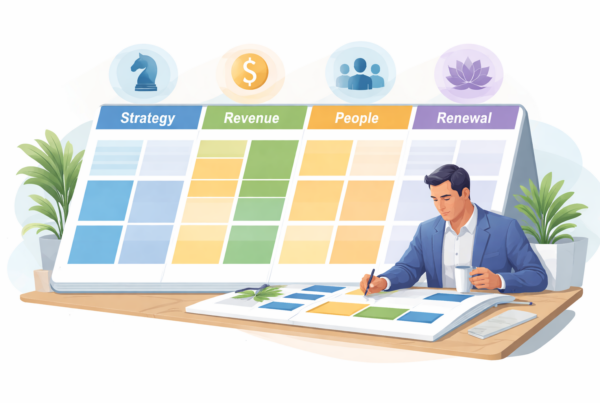

Stephen R. Covey’s The 7 Habits of Highly Effective People remains a familiar framework for reflection on priorities, relationships and renewal. The ideas are not a shortcut to success or a substitute for professional advice; their value is in choosing small, observable changes that fit the situation.
A useful way to use a well-known framework
It is easy to turn a framework into a long list of ideals. A more practical approach is to choose one current challenge, identify the habit that prompts a useful question, then test a realistic action. For example, a manager preparing for a difficult conversation might focus on listening first, clarifying the shared outcome and agreeing on a next step.
Covey grouped the first three habits around personal responsibility and priorities, the next three around working with others, and the seventh around renewal. The following reflections are a practical interpretation, not a replacement for the book or for expert support where it is needed.
1. Be proactive: separate response from reaction
When something goes wrong, list what is known, what is assumed and what is within your influence. This does not mean a person controls every outcome. It means choosing a response rather than treating frustration as a plan.
Try: Before responding to a difficult email, write one factual sentence about the issue and one constructive action you can take.
2. Begin with the end in mind: define a useful outcome
Before starting a project or meeting, describe the outcome in plain language. A good outcome is specific enough to guide choices and flexible enough to change when new evidence appears.
Try: Replace “have a good meeting” with “leave with a named decision, an owner and a date for the next update.”
3. Put first things first: protect the work that matters
Prioritization involves trade-offs. Look at the week ahead and distinguish urgent requests from work that supports an agreed goal, a customer commitment or a team responsibility. Then make room for the latter before the calendar fills.
Try: Reserve a short, realistic block for one important task and tell the relevant people when they can expect it.
4. Think win-win: understand interests before proposing a deal
“Win-win” does not mean every request can be granted. It means looking for a fair, workable arrangement while being honest about constraints. Sometimes the responsible outcome is a clear no, a different option or an escalation.
Try: In a negotiation, ask what the other person needs to protect before explaining your own non-negotiables.
5. Seek first to understand: listen for the real issue
Listening is more than waiting for a turn to reply. Summarize the other person’s point, ask what you may have missed and check whether you have understood the concern. This can reduce avoidable friction, especially when people are using the same words to mean different things.
Try: Say, “What I am hearing is … Have I got that right?” before offering your view.
6. Synergize: use differences deliberately
Different experience and viewpoints can improve a decision when the conversation is well structured. Invite relevant challenge, make the decision-maker clear and record the reasoning. Agreement is not the same as quality; respectful disagreement can reveal risks and options.
Try: Ask one colleague to identify a risk in a proposed plan and another to identify an opportunity, then decide what changes.
7. Sharpen the saw: make renewal sustainable
Renewal can mean protecting time for learning, rest, relationships, movement or professional reflection. The right choice varies between people and roles. The point is not to optimize every hour; it is to notice when the way of working is becoming unsustainable and make an intentional adjustment.
Try: At the end of the week, note one practice that helped you work well and one boundary that would make the following week more manageable.
Applying the habits at work
Choose one behaviour, a time frame and a way to review it. For example, a team leader might practise closing each weekly meeting with a decision, owner and next date for four weeks, then ask the team whether that made responsibilities clearer. This is more useful than claiming that a broad idea will automatically improve performance.
If the issue involves employment obligations, serious conflict, health, safety or a legal concern, involve the appropriate internal or specialist support. Coaching can help a person reflect and prepare, but it does not replace those responsibilities.
Frequently asked questions
Do I need to apply all seven habits at once?
No. One relevant practice, reviewed honestly, is usually more sustainable than a wholesale change programme.
Can these ideas help a team?
They can offer useful prompts for agreements and conversations, but a team also needs clear roles, decisions, resources and accountability.
Where can I explore coaching support?
A short introductory conversation can help clarify the challenge and whether coaching is a sensible next step. Book a free 15-minute fit call.