
You can’t read the label from inside the jar. It is a useful metaphor for leadership: the closer you are to a decision, the harder it can be to notice assumptions that others experience differently.
A “blind spot” here means something worth investigating, not a diagnosis or proof that the leader caused a business problem. Markets, resources, systems and responsibilities matter too. The purpose is to ask better questions and compare impressions with evidence.

Seven patterns to investigate
1. Plans without clear ownership
If priorities are repeatedly missed, check whether the work had a named owner, adequate resources and a realistic deadline. A weekly review may help, but an arbitrary completion target can encourage people to hide delays or choose easy commitments.
2. Decisions that wait without a reason
Record where a recurring decision waits and what information is missing. Agree a proportionate decision process rather than applying one deadline to every issue. Faster is not necessarily better when consultation or careful review is required.
3. Everything returning to the leader
Ask whether authority, standards and escalation routes are clear. Distinguish unnecessary approval from essential oversight. Do not set a blanket percentage of decisions that must move downward regardless of risk or capability.
4. Measures that pull teams in different directions
A sales target may conflict with delivery capacity or quality. Review the combined effect of measures with the people doing the work. Changes to compensation or employment arrangements require appropriate HR and specialist advice, not simply a new dashboard.
5. Assumptions that go unchallenged
Before a significant choice, ask what evidence would change your view. Invite relevant alternatives and examine why a proposal might fail. A challenge session should support a real decision, not force someone to play an adversarial role without preparation or safety.
6. Concerns surfacing late
Ask whether people know how to raise concerns and what happens afterward. Silence is not proof that a team feels safe. Provide appropriate formal routes for serious issues and protect confidential information. A meeting ritual cannot replace action on a legitimate concern.
7. Decisions without a review trail
For an important decision, record the options, assumptions, owner, reasons and review date. Later, compare what happened with what was expected. Avoid judging decision quality solely by a favourable outcome that may have involved luck.
Choose a proportionate way to gather feedback
A focused conversation, decision review or meeting observation may be enough to start. More formal feedback processes need a clear purpose, informed participation, appropriate expertise and an agreement about who receives the results.
Do not promise anonymity that cannot be maintained in a small group. Keep raw feedback and identifiable employee or customer information restricted to those who need it. Explain how information will be used before collecting it.
A hypothetical review
Imagine a leader who believes project approvals are quick. Colleagues report that requests wait because nobody knows what information is required. The team reviews a small sample of recent requests, agrees a short checklist and identifies a backup decision-maker.
At a later review, they examine waiting time, quality and exceptions. The result might support the new process, reveal another constraint or suggest stopping the experiment. This is an illustrative scenario, not a client case or a promised improvement.
Turn reflection into one manageable experiment
- Name the recurring situation without blaming a person.
- Separate observed facts from interpretations.
- Ask who else has relevant information.
- Choose a change within your authority and resources.
- Agree a review date and look for unintended effects.
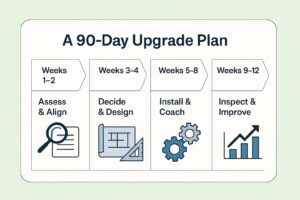
A 90-day period can be a planning choice, but it is not a universal results deadline. There is no validated total score or threshold in this article that determines the quality of your leadership.

Where coaching may fit
Coaching can help you examine assumptions, prepare conversations and review actions. It does not guarantee financial returns, employee retention or faster decisions, and it does not replace a formal investigation or specialist assessment.
Explore executive coaching with Joel, or book a free 15-minute fit call. You can also apply for two weeks of free coaching; applications are reviewed personally and acceptance is not guaranteed.