Coaching Success · Reading with purpose
Strategy, Growth & Profit Books
← Joel’s Business Library
For business owners deciding where to focus, what the numbers are saying and how growth can become more deliberate. Begin with the practical decision-making books; the later selections widen the discussion to purpose and the economy.
10 selections · Reading notes from Coaching Success · Updated September 2026
Start with one book. Choose the situation closest to your own, try the suggested action and review what you learn. The exercises are original application prompts from Coaching Success, rather than quotations from the books.
Three places to start
01
Good Strategy Bad Strategy
Richard Rumelt
Best for: Owners whose strategy has become a list of ambitions.
Reading notes & one action to try
Why it belongs on this shelf
Rumelt’s distinction between diagnosing a challenge and announcing a target is especially useful before planning a new quarter. A strategy should explain what you will do about a specific obstacle and why those actions belong together.
Try this
Describe your biggest constraint in one paragraph without using a revenue target. Choose two coordinated actions that address its cause.
Keep in mind
A good diagnosis is a starting hypothesis. Test it against what customers, staff and the numbers actually show.
02
The Road Less Stupid
Keith J. Cunningham
Best for: Owners who need better decisions before more activity.
Reading notes & one action to try
Why it belongs on this shelf
The book makes room for deliberate thinking before committing time and money. It is a useful counterweight to the habit of answering a difficult business question with a new project or another busy week.
Try this
Reserve 30 uninterrupted minutes. Write one important question, three possible explanations and the evidence that would change your mind.
Keep in mind
Reflection only helps when it leads to a decision, an experiment or a clearer reason to wait.
03
The Ultimate Blueprint for an Insanely Successful Business
Keith J. Cunningham
Best for: Owners connecting business activity to financial performance.
Reading notes & one action to try
Why it belongs on this shelf
Sales, earnings and cash are related but different. The practical value here is attention to the activities that produce the figures, rather than trying to manage a business by looking only at its headline revenue.
Try this
Select one financial measure you review regularly. Write the operational activities that influence it and choose one to track alongside the number.
Keep in mind
Use your accountant’s help with definitions and reporting; a reading framework is not a substitute for reliable financial records.
Explore the rest of the shelf
04
Keys to the Vault
Keith J. Cunningham
Best for: Entrepreneurs strengthening their financial understanding.
Reading notes & one action to try
Why it belongs on this shelf
Hard work does not automatically produce a financially sound business. This is a prompt to treat understanding the numbers as a skill to practise rather than an administrative job to hand over completely.
Try this
List the three financial questions you cannot confidently answer about your business. Bring them to your next accountant or adviser meeting.
Keep in mind
Keep decisions grounded in your own cash position, obligations and professional advice.
05
The Entrepreneur’s Journey
Alon Braun
Best for: Entrepreneurs joining up the different parts of a business.
Reading notes & one action to try
Why it belongs on this shelf
A venture needs more than a promising product. The book’s broad business perspective is useful for noticing gaps between vision, marketing, operations, finance and the people expected to make the plan work.
Try this
Sketch your main business functions on one page. For each, name the owner, the intended output and the most important unresolved question.
Keep in mind
Use the breadth to find a priority; trying to improve every function at once can dilute execution.
06
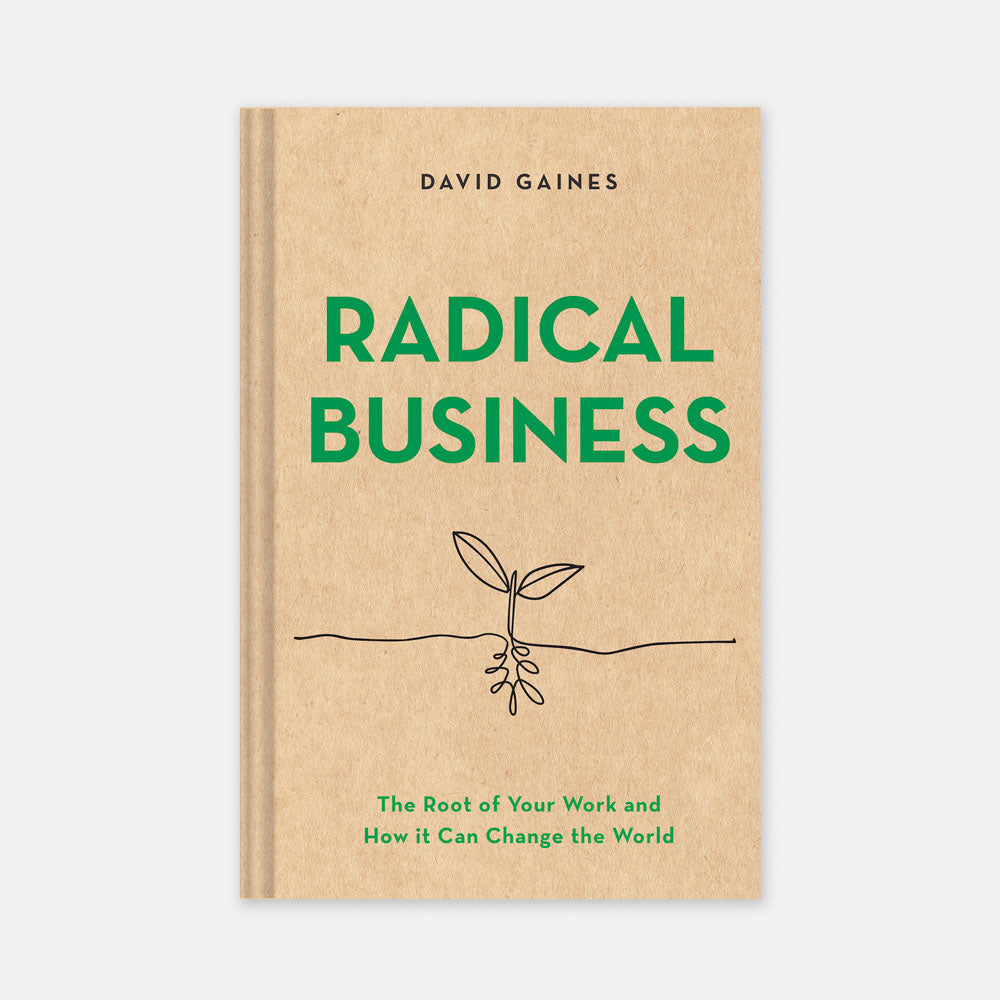
Radical Business
David Gaines
Best for: Owners thinking about people, impact and commercial choices together.
Reading notes & one action to try
Why it belongs on this shelf
This expands the discussion of business value beyond a single financial result. It can help a leadership team make its responsibilities more explicit and consider how day-to-day choices affect the people around the company.
Try this
Choose one decision about suppliers, customers or staff. Record its financial effect and one meaningful non-financial consequence.
Keep in mind
A purpose statement needs observable choices and measures if it is to influence how the business operates.
07
Conscious Capitalism
John Mackey & Raj Sisodia
Best for: Leaders exploring a stakeholder view of business.
Reading notes & one action to try
Why it belongs on this shelf
The book makes a case for connecting purpose with the interests of customers, employees, investors and others. Read it as an invitation to examine how value is created and who carries the cost of a decision.
Try this
Map the stakeholders affected by one service or product. Identify one relationship where an improvement could create value for both sides.
Keep in mind
A broader perspective does not make trade-offs disappear. Be explicit about costs, constraints and competing needs.
08
The Sticking Point Solution
Jay Abraham
Best for: Owners trying to understand stalled growth.
Reading notes & one action to try
Why it belongs on this shelf
When growth stops, doing more of the same can deepen the problem. This offers a useful reason to inspect assumptions about the market, the customer relationship and the measures used to judge progress.
Try this
Name the point where prospects or customers most often stop moving forward. Review five examples before deciding what to change.
Keep in mind
Avoid treating every plateau as a marketing issue; capacity, delivery and market conditions may be part of the diagnosis.
09
Invent and Wander
Jeff Bezos; introduction by Walter Isaacson
Best for: Leaders considering customer focus and long-term decisions.
Reading notes & one action to try
Why it belongs on this shelf
This collection offers a window into an approach to experimentation, customers and building for the long term. Its usefulness comes from testing the reasoning against your own business rather than borrowing the scale of the examples.
Try this
Identify one customer problem you could understand better. Design a small, affordable test that would teach you something within two weeks.
Keep in mind
Amazon’s resources and market position are unusual. Translate the principle before copying a practice.
10
Mission Economy
Mariana Mazzucato
Best for: Readers interested in business within a wider economic system.
Reading notes & one action to try
Why it belongs on this shelf
This is a broader perspective on ambitious goals and the relationship between public and private activity. It belongs after the practical owner books when you want to consider how organisations coordinate around problems larger than one company.
Try this
Choose a challenge in your sector that no business can solve alone. Identify the organisations whose cooperation would be needed.
Keep in mind
This is economic and policy thinking, not a small-business cash-flow manual or a universally agreed programme.
These notes help you choose and apply a book; they are not substitutes for the complete work. You can borrow or buy the edition that suits you. Choose the ideas that fit your circumstances and test them thoughtfully.
Browse all six reading sections
Cover images via Open Library and linked author, publisher or bookseller pages. Editions may differ.