Coaching Success · Reading with purpose
Books for Leadership & Teams
← Joel’s Business Library
For owners, executives and managers who want clearer expectations, better conversations and a team that can take responsibility. Start with the first three books, then choose the question that matters most to you.
10 selections · Reading notes from Coaching Success · Updated September 2026
Start with one book. Choose the situation closest to your own, try the suggested action and review what you learn. The exercises are original application prompts from Coaching Success, rather than quotations from the books.
Three places to start
01
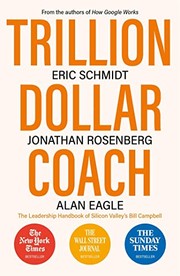
Trillion Dollar Coach
Eric Schmidt, Jonathan Rosenberg & Alan Eagle
Best for: Managers who want to develop people, not simply allocate tasks.
Reading notes & one action to try
Why it belongs on this shelf
The account of Bill Campbell’s coaching puts trust, candid conversations and team relationships alongside business performance. Read it with your own meeting habits in mind: the way a leader listens can determine which problems ever reach the table.
Try this
In your next one-to-one, ask what is making good work harder. Agree one obstacle you will help remove, then follow up the following week.
Keep in mind
Its technology-company setting needs translating to the scale and resources of your own team.
02
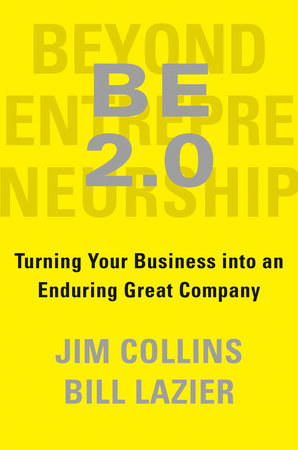
BE 2.0
Jim Collins & Bill Lazier
Best for: Owners building a company that can endure beyond its founder.
Reading notes & one action to try
Why it belongs on this shelf
This connects leadership, purpose and disciplined company building. The useful question is whether the organisation has a shared direction that people can act on without waiting for the founder to interpret every decision.
Try this
Write one sentence explaining what your company is building and why. Ask three team members to explain it in their own words; discuss the differences.
Keep in mind
Treat the framework as a basis for choices, not a guarantee that copying admired companies produces the same results.
03
The Hard Thing About Hard Things
Ben Horowitz
Best for: Leaders facing difficult decisions with no comfortable answer.
Reading notes & one action to try
Why it belongs on this shelf
Horowitz explores the uncomfortable work of running a company when plans stop being tidy. It is useful for distinguishing a necessary hard conversation from a problem that grows because everyone keeps avoiding it.
Try this
Identify one management decision you have postponed. Write the cost of waiting, the information still missing and the date you will decide.
Keep in mind
Many examples come from venture-backed technology businesses; the intensity is not a model for everyday working life.
Explore the rest of the shelf
Best for: Managers reconsidering what motivates capable people.
Reading notes & one action to try
Why it belongs on this shelf
Autonomy, mastery and purpose offer a useful lens on work design. A reward alone may not fix a role that gives someone little ownership, no room to improve or no clear reason their contribution matters.
Try this
Choose one role and ask its holder where greater decision-making freedom would help. Define a small trial with clear boundaries and a review date.
Keep in mind
Motivation also depends on fair pay, resources and individual circumstances. This is not an excuse to replace compensation with purpose.
05
The Excellence Dividend
Tom Peters
Best for: Leaders who want service and people development to become daily priorities.
Reading notes & one action to try
Why it belongs on this shelf
Peters brings attention back to the ordinary encounters through which a business earns trust. Excellence becomes more concrete when translated into how colleagues are supported and how customers experience the next interaction.
Try this
Choose one recurring customer frustration. Ask the team closest to it for a practical improvement and give someone ownership of a two-week trial.
Keep in mind
The energetic style is idea-rich; choose a few useful practices rather than turning every passage into another initiative.
06
Who
Geoff Smart & Randy Street
Best for: Owners and managers preparing to hire.
Reading notes & one action to try
Why it belongs on this shelf
A clearer definition of success makes hiring conversations more useful. This is a prompt to specify the outcomes of a role before deciding which candidate tells the most convincing story in an interview.
Try this
Before the next vacancy, list three outcomes the person must achieve in their first six months. Use the same job-relevant questions for each candidate.
Keep in mind
Adapt any selection process to fair, accessible hiring practices and your local employment requirements.
07
Lead with a Story
Paul Smith
Best for: Leaders who need ideas to be understood and remembered.
Reading notes & one action to try
Why it belongs on this shelf
Stories can give an abstract value or decision a concrete human setting. The useful discipline is to connect a real situation, a choice and its consequence, rather than covering a weak argument with entertaining detail.
Try this
Take one value in your business and find a true example of it in action. Explain the situation and the choice in two minutes.
Keep in mind
Keep stories accurate and protect confidential details; a memorable anecdote does not replace wider evidence.
08
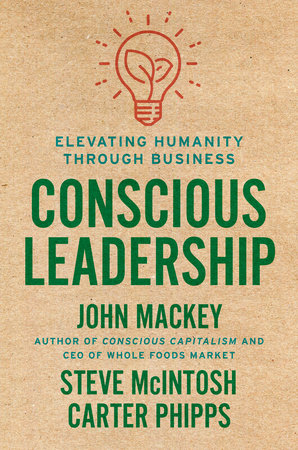
Conscious Leadership
John Mackey, Steve McIntosh & Carter Phipps
Best for: Leaders exploring the relationship between purpose and responsibility.
Reading notes & one action to try
Why it belongs on this shelf
The book invites a broader view of leadership than personal status or quarterly results. It raises questions about the people affected by a decision and about the capacities a leader needs to grow.
Try this
For one live decision, list the groups affected and the trade-off each faces. Check whether your stated purpose changes the decision you would otherwise make.
Keep in mind
Use purpose to sharpen accountability, not to avoid financial realities or disagreement.
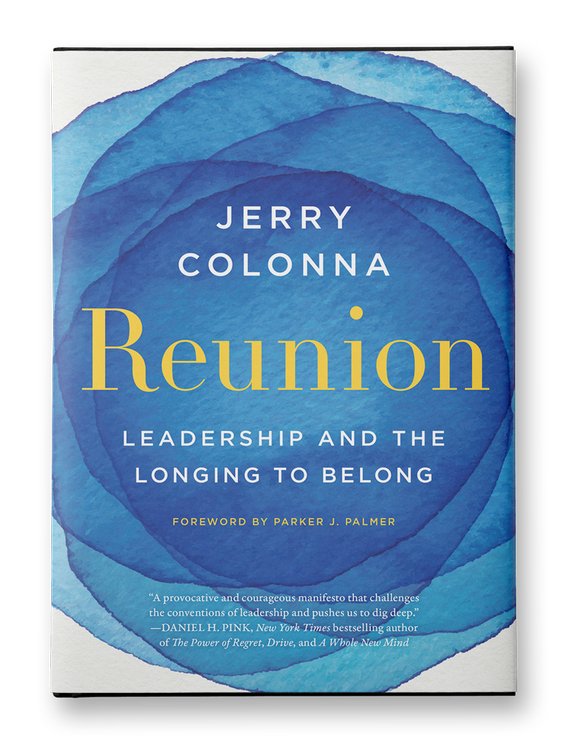
Best for: Leaders examining belonging, responsibility and the systems around them.
Reading notes & one action to try
Why it belongs on this shelf
This is reflective reading about leadership’s wider human context. It creates space to consider whose experience is visible in an organisation and whose contribution or difficulty is easy to overlook.
Try this
Ask whose perspective is missing from a decision you are making. Create a respectful way for that perspective to be heard before deciding.
Keep in mind
Choose this for deeper reflection; it is not a quick operating manual for team performance.
Best for: Founders who want to understand their own patterns as leaders.
Reading notes & one action to try
Why it belongs on this shelf
Leadership problems can bring personal assumptions into sharp focus. Colonna’s reflective approach is useful when the same reaction keeps appearing across different people, situations or stages of a business.
Try this
After a difficult interaction, separate what happened from the story you told yourself about it. Identify one question you could ask before reacting next time.
Keep in mind
Personal reflection complements practical management; it does not remove the need to clarify roles and expectations.
Turn reading into progress
Pick one idea, one action and one date to review it. For a related perspective, explore Team.
Explore business coaching
These notes help you choose and apply a book; they are not substitutes for the complete work. You can borrow or buy the edition that suits you. Choose the ideas that fit your circumstances and test them thoughtfully.
Browse all six reading sections
Cover images via Open Library and linked author, publisher or bookseller pages. Editions may differ.